
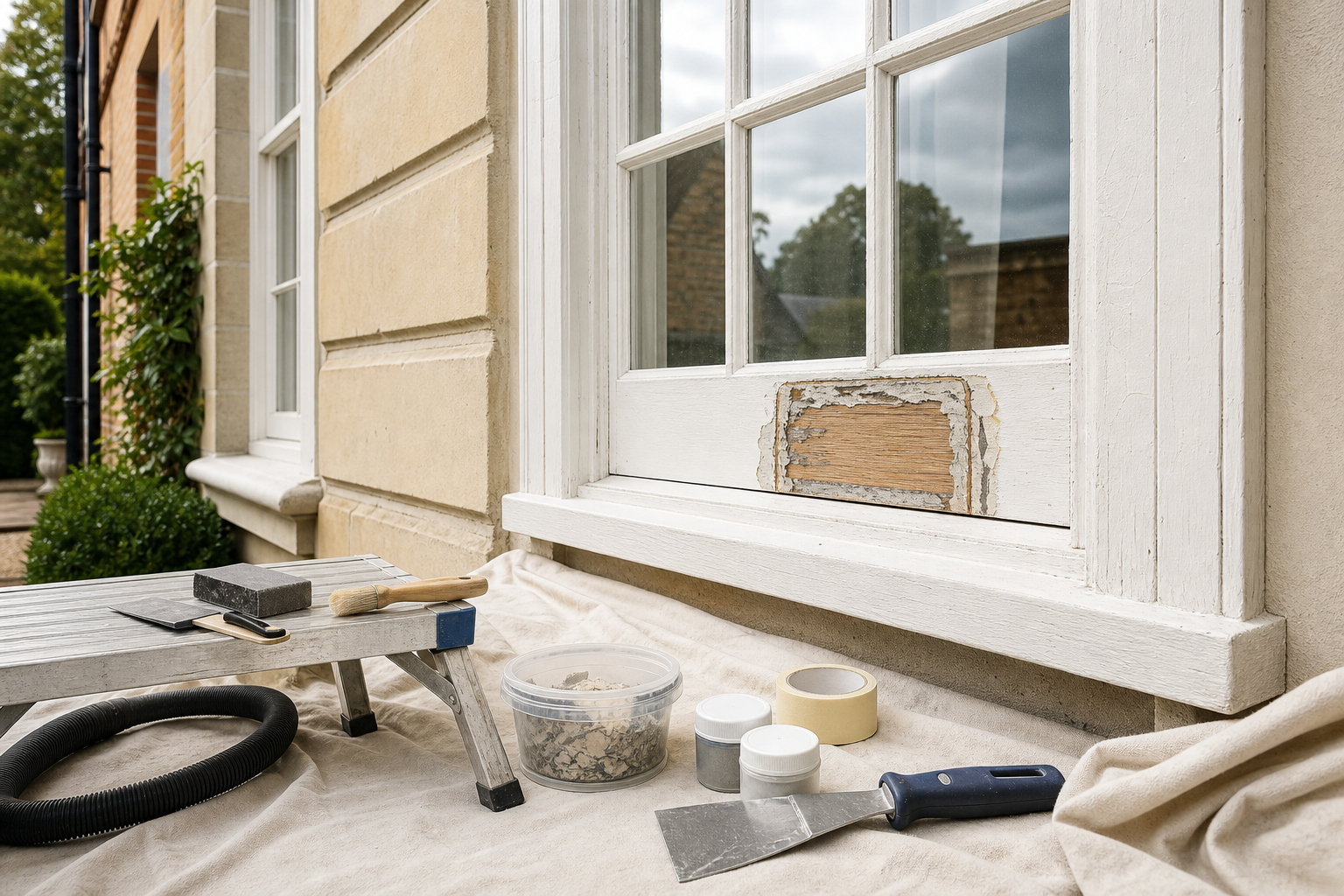
The difference you'll notice once the old layers are gone
Original details come back into view
Thick old coatings can blur mouldings, panels, and edges. We strip them back with care so the character of the surface can be seen again.
Preparation starts with the truth
Removing failed paint shows what condition the surface is really in. That gives you a more honest basis for repairs and a finish with a better chance of lasting.
Handled with older buildings in mind
Heritage work needs patience and judgement, not brute force. We work carefully around aged substrates and original features that deserve to be preserved.
When stripping back is the better choice
Paint stripping makes sense when old coatings have started to fail, built up over time, or buried the sharp detail that gives older homes their character. We begin by looking closely at the surface, with Westcote Heritage involved from the start, because timber, masonry, and metal all need a different approach before any coating comes off.
On period properties, layers of old paint can hide poor adhesion, trap defects, and soften mouldings or joinery profiles that should look crisp again. Sanding and repainting alone won't solve that kind of problem if the base underneath is already unstable. By removing the failing finish properly, we can assess what is sound, spot what needs making good, and prepare the surface for decoration that lasts longer. It's a practical first step in high-quality redecoration, especially when you want the final result to respect the age and detail of the building.

What the process looks like on an older property
Our process starts with an inspection and a small test area, so we can judge how the existing coating is behaving before wider work begins with Westcote Heritage. We protect nearby surfaces carefully, remove coatings in a controlled way, then clean and smooth the substrate so hidden issues are easier to see.
Older timber can reveal failed repairs, while masonry may show cracks or weak patches once the paint is gone. We deal with that preparation first, because repainting too soon only covers the problem for a while. Once the base is sound, we carry the work through into interior or exterior decorating as part of a wider refurbishment or heritage project.
Frequently asked questions
When is paint stripping better than sanding and repainting?
Paint stripping is usually the better route when coatings are heavily flaking, badly bonded, or built up in many old layers. It's also useful when decorative timber details, mouldings, or metal features have been obscured and need to be properly revealed before repainting.
Can paint stripping uncover extra repair work?
Yes, and that's often one of the main reasons for doing it properly. Once the old coating is removed, we may find failed filler, worn timber, cracks, or earlier patch repairs that need attention before the final decoration can go ahead.
Is paint stripping suitable for listed and heritage properties?
It can be, provided we approach the work with care and experience. We assess older surfaces properly first, and we always aim to preserve original detail while creating a sound base for sympathetic redecoration.