
Why woodwork matters when decorating your home
Made for older woodwork
We prepare timber with the age of the property in mind. That helps protect original details you don't want sanded away.
Clean lines before colour
Filling, feathering and careful caulking make a visible difference. You get sharper edges and a neater final coat.
Fits wider refurbishment work
Woodwork prep doesn't have to sit in isolation. We can schedule it sensibly within broader decorating and multi-trade projects.
The groundwork that makes painted woodwork last
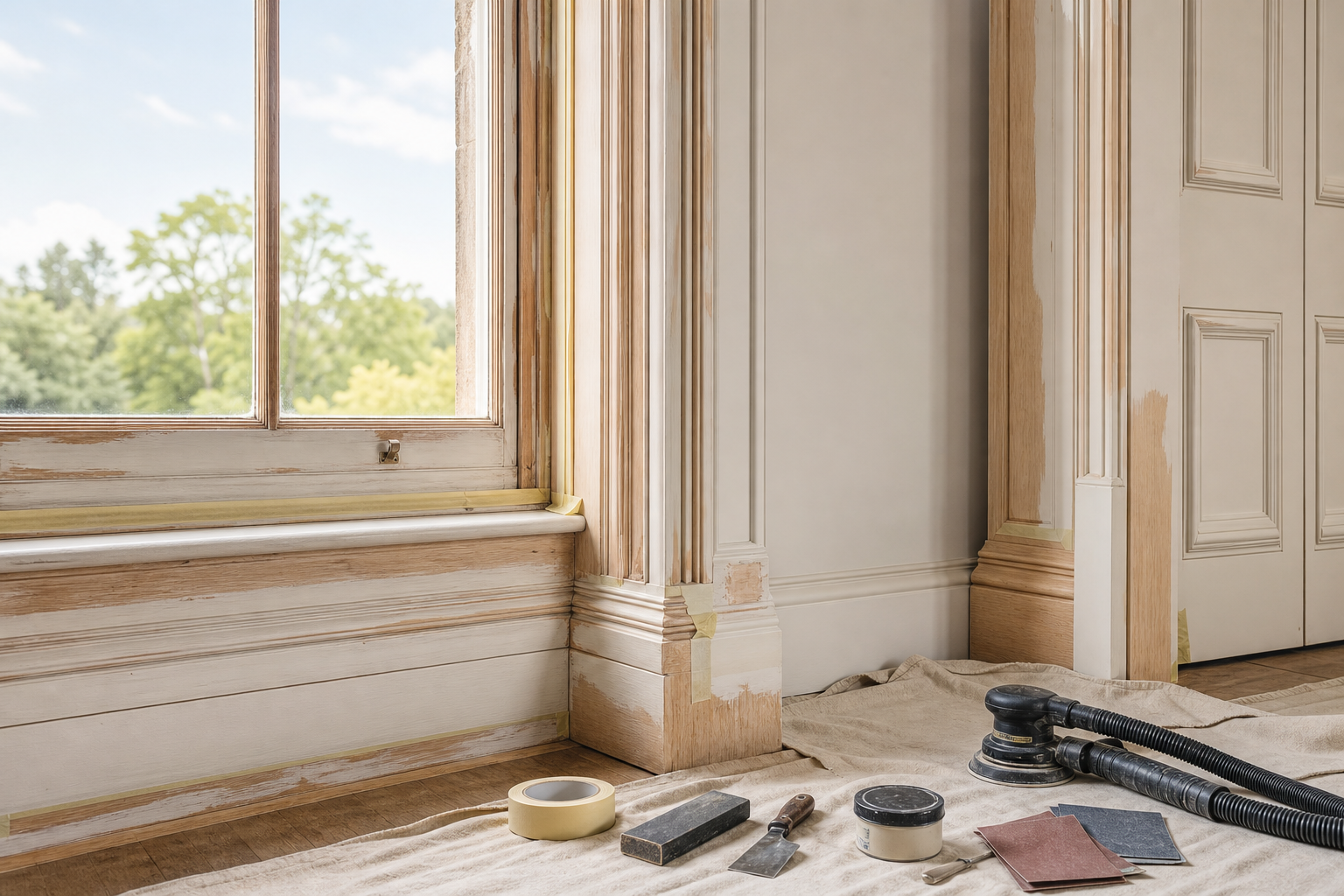
Peeling edges, swollen timber and old stain bleed can ruin a finish before the first topcoat even goes on. We start woodwork preparation by assessing what is already on the surface, and Westcote Heritage uses that inspection to spot loose coatings, cracks, minor rot, swelling and other defects that need attention first. Older homes often carry years of paint build-up across skirting, doors, architraves and stair parts, so careful prep is what keeps mouldings sharp instead of blunting them with heavy sanding.
We protect nearby surfaces, clean away grease and dust, scrape back failing paint and sand enough to key the surface and feather rough edges. Bare timber, knots and stained patches are spot primed where needed, while small defects are filled and gaps can be re-caulked to tidy the lines before painting begins. That approach gives you a smoother finish, better adhesion and woodwork that stands up far better to daily knocks and cleaning.

Prepared to suit the timber, not forced into one method
Previously painted woodwork needs a different touch from bare timber or old varnished surfaces, and we adjust the process to suit what is in front of us. Westcote Heritage takes extra care on period and listed properties, where decorative profiles, delicate edge work and older substrates need patience rather than brute force. For interior trim, doors, frames, banisters and window boards, we build the paint system in practical stages with primer, undercoat and topcoat chosen for durability, appearance and ease of cleaning.
We can also prepare exterior joinery such as fascias, soffits and windows as part of wider decorating or refurbishment work. Before we begin, it helps if you can clear access around the woodwork and discuss hardware removal, ventilation and drying time with us so the job runs smoothly.
Frequently asked questions
What does woodwork preparation include before painting?
We inspect the existing surface first, then deal with problems such as peeling paint, cracks, swelling, staining and small defects. Preparation usually involves protecting surrounding areas, cleaning, scraping loose coatings, sanding, filling, re-caulking where needed and spot priming bare timber or troublesome patches.
Does preparation change for painted, varnished and bare wood?
Yes, because each surface behaves differently. Previously painted wood often needs loose material removed and edges feathered, varnished wood usually needs thorough keying for adhesion, and bare timber needs the right priming before undercoats and finishing coats go on.
How can you get ready before woodwork preparation starts?
Clear access around skirting boards, doors and stairs as much as you can, and let us know if ironmongery or door furniture needs removing and reinstating. Good ventilation also helps with drying and curing once preparation and painting are under way.